Monday, March 31, 2014

Rant and Flight 370

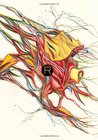
RantRant by Chuck Palahniuk

My rating: 5 of 5 stars


Chuck Palahniuk shifts gears without pushing in the clutch.  Somehow, even his jarring shifts come off as smooth.  I'm certain that many readers would disagree, but that's how I experienced Rant. 

I need to read this again now that I have the full picture. The oral-history style of the story and the shifting credibility of the narrators insure any second reading will be a new experience. 

I think the style of narrative made the book compelling, and it illustrated human habits in storytelling that are timeless, predictable, and always fascinating.  People emphasize different parts of the same scene, exaggerate, tactically omit, or simply leave much out.  All of this illustrated how we frame stories to suit our comfort needs. 

For example, I read this book during the frenzy over the fate of flight 370.  As I type this, CNN's lead story (in nearly 20-point font) is "Aircraft spots 'One of the Most Promising Leads.'"  One of the related articles is "What is too much plane news?"  I'm not making either of those up.  I'm going to say we have had way too much plane news.

People who need to feel that we as humans can immediately know or control whatever we want to know or control in our world just can't stop trying to solve the puzzle.  There is idle curiosity, interested problem-solving, manic obsession... all are represented. 

Others can't believe this thing can't sit until all the pieces settle or wonder why it's such a curiosity to those without loved ones on the plane (this is where I live).  Some of us think it just crashed in the ocean, that stuff happens (even in this day and age), and that we'll eventually know "something" about what brand of stuff happened, and that that knowledge won't satisfy everyone and there will be internet videos and basic mania lasting through ages. Many eyes will roll.    

What does this have to do with Rant?  Well, Buster Rant is like flight 370, and the people telling the story have different ideas as to whether he is like the legendary Bill Brasky bordering on diety or a random nut job.  The religion example is explicitly used in the book at times, but Flight 370 works as well, thus showing how timeless and deep these human traits are. 

It's a fun story that leaves the reader in a place to evaluate the credibility of the various onlookers while taking a really neat philosophical walk through some pretty interesting mental obstacle courses.  No matter what a reader takes from the book, the mental journey is worthy.

Some people need to believe that Rant's actions had a particular meaning, purpose, or message.  It seems to give them a reason to get up in the morning. Others roll their eyes, some for good reason, but others too quickly.  The truth is usually somewhere in the middle.

This story illustrates all of those perspectives brilliantly, and it includes some fascinating and twisted plot points and scenes that only come from Chuck Palahniuk.  


View all my reviews

Saturday, March 22, 2014

Sequels...


Let's talk about sequels shall we?
So I think there is a pretty well understood theory that there are sequels that are good, and sequels that are ok, and sequels that are best left unwritten.  We know that there are entire series that are built around sequels and on a regular basis, the sequels can turn out to be better than the originals.  Sci-Fi series are replete with examples, (cough cough The Empire Strikes Back).
So lets turn our attention thither.

This is not an example of the best sequels ever.  Nor is it the worst. the Rise of Ransom City is a continuation, but not really a sequel to Gilman's The Half Made World.  This book focuses primarily on the life and times of Harry Ransom.  Harry is a fairly well eccentric hustler who accidentally discovers something as a child that he then combines with some other half baked ideas to invent the Ransom Light Bringing Process (also called a variety of other things).  He has wanted to be famous in his time, with some delusions of grandeur from time he was young (and possibly made worse by the doctors from the Engines).  
The universe is the same as the Half Made World, and Gilman sort of uses the primary characters of Liv, former mental scientist, and Creedmoor, former agent of the notorious Gun, as a crutch to move his story along and try to tie the books together.  I think this is honestly one of the primary mistakes.  They are a constant subject of reference through out the story, because at least for a little while they all travel together back out of the west and on towards the bigger civilizations in the East.  
Now this book is built as the memoirs of Ransom in his up and coming, then briefly famous/notorious phase, then the last little bit as he fades into the west.  That is both an interesting style and a challenge to the reader to put up with the droning on and on.  Harry is self absorbed.  And I honestly didn't think he was nearly as interesting as he thought he was.  I kept wanting him to describe the process a little better, which never happened, so that was kind of a disappointment too.  
Generally this book was fine, but it didn't really appeal to me.  I finished out of desire to be done, but not because it really brought me along for the ride.
Try again Felix. 

Monday, March 17, 2014

The Love Affairs of Nathaniel P. - a review

The Love Affairs of Nathaniel P.The Love Affairs of Nathaniel P. by Adelle Waldman
My rating: 4 of 5 stars

There are not many times that I've had an emotional reaction to a book like this one. I kept changing sides on just how I felt about it, one minute getting very upset at what felt like cheap shots at my gender, the next admiring a portrayal of the simple deception of a male mind at work, the next peevishly setting my nook down and muttering "Dammit, that's low. But, true." While there is no way for me to really connect completely with this novel (You'd have to be a writer and/or live in New York for that), I think this is a pretty good look at how (some) modern males go through dating. And the main character, Nate, feels like an a-hole, but not one you would imprint as such right away. He feels like one of those guys who, the first time you meet him (male or female), you thinks he's great, but slowly that high opinion gets eroded as his facade, and interest in what you think, fades away. The only complaint I have with the book is that Hannah, Nate's girlfriend through most of the book, seems like she is a little too innocently presented. That was my biggest struggle with the book, she does nothing to deserve the crap unloaded on her by Nate, and I'm not sure if Waldman does that on purpose to make sure that, at the end, your alliance is on the preferred side. To be fair, Waldman doesn't portray all the females in the book like that. As you learn more about the women in Nate's past, roads get connected, lights turn on, and you start to realize why he is how he is. And when he finally ends up with a much more attractive, and emotionally combative partner, that does seem like where he should have been the whole time. I read this book quickly, and since finishing a couple of days ago, have not stopped pondering why it got under my skin. It may just be an instinctual reaction to an attack on my team. It could be that Waldman is actually being unfair, loading the decks before the game. But I love how much this book made me question every little moment for what it meant. It's not a comforting read, but a worthy one, certainly.


View all my reviews

Saturday, March 1, 2014

The Alchemist - a review

The AlchemistThe Alchemist by Paulo Coelho

My rating: 4 of 5 stars


This is not a book about wishful thinking. Rather, it is about attaining what you will by placing one foot in front of the other. There seem to be a variety of ways to take the story, but this is how I saw it. 

I was surprised at some of the vitriol directed at the book in reviews.  It really does seem to be an all-or-nothing view from those who took the time to write about it.  When I read the bad reviews, I saw a theme: Most of the worst reviews seemed to equate this book with "The Secret" or wishful thinking or something like that.  (The word "hippie" was used a lot in those reviews is what I'm trying to say). 

I enjoyed this book, and that may be because I did not read it as a self-help book or to seek any life answers.  Coelho wrote a very short and very simple story, and he makes his point in a completely neutral sense.  And, it made me think.  Although it is written in the style and setting of a parable, I really don't think that is the only way to take this book.

In the heart vs. head debate, I try to advocate the latter without diminishing the former. But, ultimately, I think heart and head describe the same thing.  It seems the difference is how people describe the risk level (low for head and high for heart).  So, for me, the way Coelho touched on various religious views without  advocating any particular one while telling a story about following dreams with determination and kindness was really neat.  No matter the motivation (religious or otherwise), good things happen to people who create positive inertia through love, respect for themselves, nature and others, and for those who show compassion.  Even being swindled and robbed doesn't change the respectful nature of Santiago, and that speaks to perseverance.     

The message about following your heart and wanting something so badly that it will just happen "as if by magic" will illicit strong reactions (hell, it usually gets me all frustrated). Many reviewers seemed to take that as the message of the book, which contributed to much of the vitriol.  But I disagree with the premise that this book advocates that message. The Alchemist struck me as a karmic view of goal achievement through doing right and persistence.  It is about acknowledging the internal pulls we all feel at times and addresses the dissonance we all feel when taking risks.  But, it also illustrates how to make the most of a tough situation and how different people look at life.   

It included a strong view of reward for kindness and decency to others.  It illustrated rewarded in ways not always expected, but ultimately fulfilling (you don't always get what you want, but what you get can be good anyway). I kept thinking about "My Name is Earl" as I read. It just kept coming back to karma. 

My favorite part was when Santiago met a man who ran a crystal shop.  That man fought the inner pulls of life and purposely sought to fail to ever visit Mecca (his dream) so that it will forever serve as his goal.  There was a charming comfort in that character because he was so settled on a simple existence.  I thought that character and his interactions with Santiago were fascinating.  And, neither outlook necessarily "wins." 

Goals can be different things to different people. Some want them to happen.  Some like the idea of them.  Others never move toward them.  Still others grab hold.  Luck favors the prepared.  Santiago is a nice guy who chased a goal, and this is his story.


View all my reviews